The Puerto Rican Flag in Old San Juan: History, Color, and a Living Backdrop
Walk through Old San Juan and you’ll notice it immediately: Puerto Rican flags everywhere. Hanging from wrought-iron balconies, draped over colonial doorways, painted on walls, fluttering from government buildings, and casually displayed from private homes. It’s not decoration—it’s identity. And it makes Old San Juan one of the most visually and emotionally rich places to photograph in the Caribbean.
A Flag Born in Resistance
The Puerto Rican flag was designed in 1895 by pro-independence activists living in New York, inspired in part by the Cuban flag. It wasn’t officially adopted on the island until 1952—but for decades before that, it was a symbol of defiance.
From 1948 to 1952, displaying the Puerto Rican flag was illegal under U.S. colonial rule. The Gag Law (Ley de la Mordaza) made it a crime to own or show the flag, sing patriotic songs, or speak openly about independence. People were arrested simply for displaying it. That history matters—because today’s abundance is the exact opposite of enforced silence.
Every flag you see in Old San Juan exists because people once risked jail for the right to show it.
The Two Blues: A Detail Photographers Love
If you look closely, you’ll notice something curious: not all Puerto Rican flags are the same blue.
Light sky blue — Often associated with the original 1895 design and independence symbolism
Dark navy blue — Standardized in 1952 for official government and commercial use
There’s ongoing debate over which is “correct,” but in practice both coexist—especially in Old San Juan. That variation creates visual texture: faded fabric flags next to freshly painted murals, soft blues against pastel walls, deep navy popping against sun-bleached stone.
For photographers, this detail adds depth without trying. The flag isn’t a prop—it’s part of the environment.
Flags Everywhere (and Why That Matters for Photos)
What makes Old San Juan unique is how integrated the flag is into daily life:
Private residences hang them proudly from balconies
Government buildings fly large, formal versions
Street vendors sell fabric flags alongside art and coffee
Murals and doors reinterpret the flag creatively
Because the flag appears organically—rather than staged—it elevates portraits and travel photos without overpowering them. A subject walking down a blue cobblestone street with a flag drifting overhead doesn’t look posed; it looks lived-in.
Using the Flag Thoughtfully in Your Photos
Whether you’re doing a portrait session, engagement shoot, or casual travel photos, the Puerto Rican flag offers an easy way to add context and story:
Let it frame the scene, not dominate it
Use it as a background layer, not a focal point
Pay attention to color harmony with clothing and surroundings
Respect that some flags are on private homes—observe first
The goal isn’t patriotism-as-prop—it’s acknowledging place.
More Than a Symbol
In Old San Juan, the Puerto Rican flag isn’t just a national emblem. It’s a reminder of survival, pride, and cultural continuity. Its abundance today is meaningful precisely because it was once forbidden.
That’s why it works so well in photos here. You’re not just capturing color—you’re capturing history hanging in plain sight.
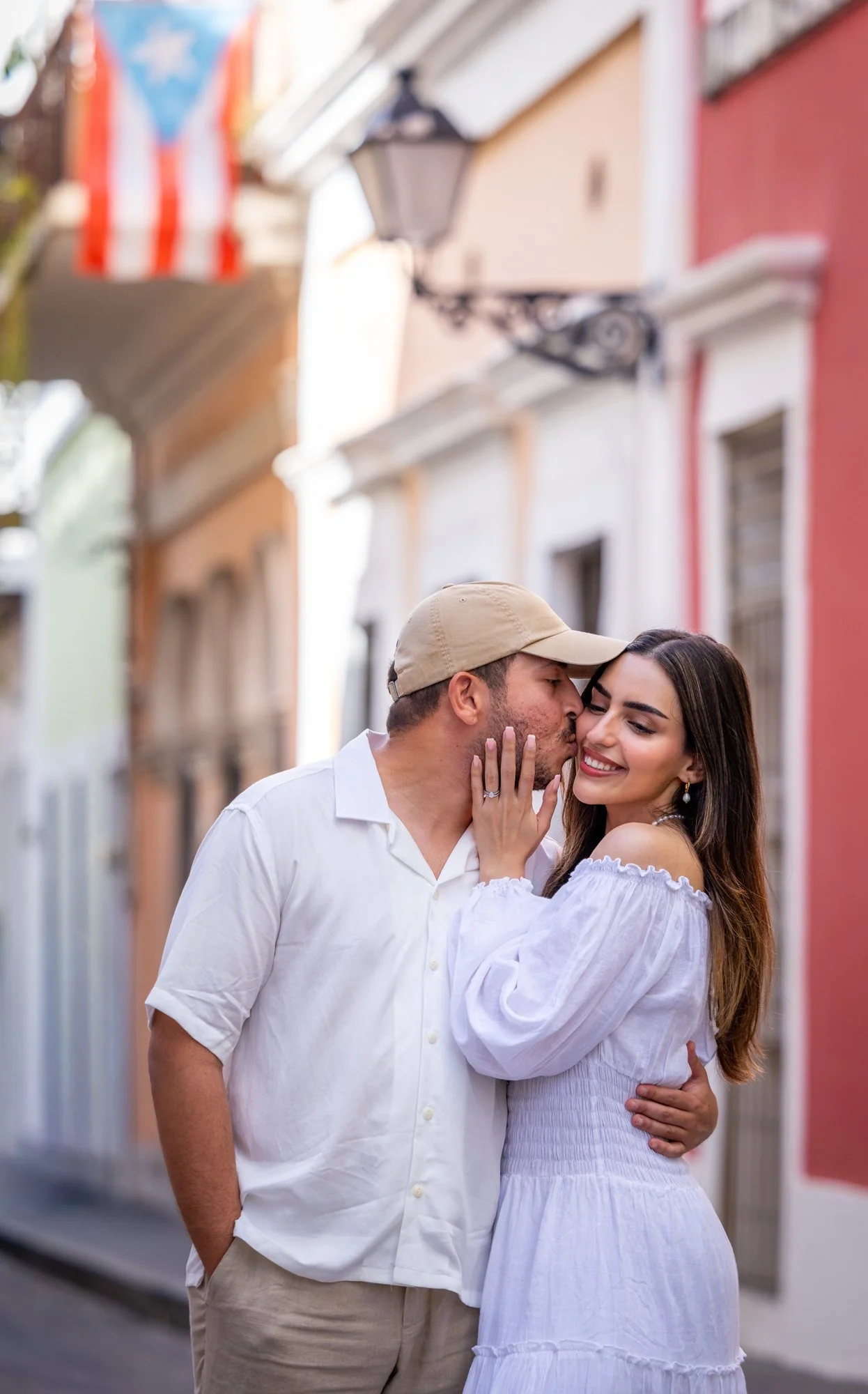
The Puerto Rican flag can be seen on residences throughout Old San Juan and provide a sense of location and color to photographs.